

Best Atlassian Statuspage Alternatives in 2026
Compare the best Atlassian Statuspage alternatives in 2026: Better Stack, Freshstatus, Instatus, Cachet, and Upptime.
Best Atlassian Statuspage Alternatives in 2026
Atlassian Statuspage is one of the most recognized tools for communicating system status and incidents to customers. It does its job well, but its pricing, limited customization on lower tiers, and tight coupling to the Atlassian ecosystem push many teams to look for alternatives, particularly teams that do not use Jira and Confluence as their primary toolchain.
A good status page tool needs to do more than display uptime. It needs to communicate incidents clearly, support both public and private pages, allow customization to match your brand, and integrate with the alerting and on-call systems your engineering team already uses. The best alternatives to Atlassian Statuspage in 2026 give you all of this without the Atlassian lock-in or the price tag that comes with it.
This guide covers what to look for in a Statuspage alternative, the best options in 2026, and what to pair with your status page tool for a complete incident response workflow.
What Atlassian Statuspage Offers (and Where It Falls Short)
Teams look for alternatives because of:
- Pricing: Statuspage's free Hobby plan supports only 100 subscribers. The Business plan at $99 per month supports 1,000 subscribers. Teams with large user bases find the cost compounds quickly
- Customization limits: Custom domains, custom CSS, and white-labeling are reserved for higher tiers
- Atlassian dependency: Full value from Statuspage comes from Atlassian integration. Teams that do not use Jira or Confluence lose a significant portion of the platform's workflow
- No built-in uptime monitoring: Statuspage displays status but does not monitor your services. You need a separate monitoring tool to feed it data
- Limited automation on lower plans: Automatic status updates triggered by monitoring alerts require the Business plan or higher
What to Look for in a Statuspage Alternative
- Public and private status pages
- Custom domain support
- Customization options
- Subscriber notifications via email, SMS, and webhook
- Uptime monitoring integration or inclusion
- Free plan or affordable entry tier
- Incident history and real-time updates
Best Atlassian Statuspage Alternatives in 2026
1. Better Stack
Better Stack is a combined uptime monitoring and status page platform with a clean, modern interface and a generous free tier.
Key features:
- Status pages included on all plans, including the free tier
- Built-in uptime monitoring with multi-location checks
- Custom domain support on all paid plans
- Beautiful, modern status page design out of the box
- Subscriber notifications via email
- SSL certificate monitoring included
Cons:
- Custom domain support requires a paid plan
- Limited customization options on lower plans
- No on-call routing: alerts go to a configured destination, not dynamically to whoever is currently on-call
- No escalation policies
- Private status pages are limited on lower tiers
- No two-way Jira sync
2. Freshstatus
Freshstatus is Freshworks' free status page tool, designed for teams that want a simple, clean status page without cost barriers.
Key features:
- Free plan with unlimited subscribers and custom domain support
- Public and private status pages
- Subscriber notifications via email
- Component-level status tracking
Cons:
- Limited monitoring integration
- Freshworks ecosystem dependency
- Limited customization on the free plan
- No built-in on-call routing or escalation
- Smaller community and ecosystem
- Advanced features like metric embedding require paid upgrades
3. Instatus
Instatus is a lightweight, affordable status page tool focused on simplicity and speed.
Key features:
- Beautiful status page design with minimal setup
- Custom domain on all plans including free
- Subscriber notifications via email, SMS, Slack, and webhook
- Affordable flat pricing (not per-subscriber)
Cons:
- Free plan limits on components and team members
- No built-in uptime monitoring
- No on-call routing or escalation
- Smaller integration ecosystem
- Limited incident management depth
- No private metric dashboards on lower plans
4. Cachet (Open Source)
Cachet is a self-hosted, open-source status page system that gives teams full control over their status page infrastructure.
Key features:
- Fully open-source with no per-seat or per-subscriber fees
- Complete control over hosting, data, and customization
- API for automated status updates
Cons:
- Requires self-hosting with significant infrastructure overhead
- No managed uptime monitoring
- No customer support
- High setup complexity
- Updates are not automatic
- No built-in SMS notifications
5. Upptime (GitHub-Based Open Source)
Upptime uses GitHub Actions and GitHub Pages to create a free, automated status page.
Key features:
- Completely free using GitHub Actions
- No infrastructure to manage
- Automated uptime monitoring built in via GitHub Actions
Cons:
- GitHub dependency
- No private status pages
- Limited customization
- No subscriber notifications out of the box
- Check frequency limited by GitHub Actions
- Not suitable for enterprise use cases
Comparing Atlassian Statuspage Alternatives
| Tool | Free Plan | Custom Domain (Free) | Built-in Monitoring | Private Pages | Self-Hosted Option |
|---|---|---|---|---|---|
| Atlassian Statuspage | Yes (100 subscribers) | No | No | Yes | No |
| Better Stack | Yes | No (paid only) | Yes | Limited | No |
| Freshstatus | Yes (unlimited) | Yes | No | Yes | No |
| Instatus | Yes (limited) | Yes | No (integrations) | Yes | No |
| Cachet | Free (self-hosted) | Yes | No | Yes | Yes |
| Upptime | Free (GitHub) | Yes | Yes (GitHub Actions) | No | Yes (GitHub) |
Complete Your Incident Response Stack with Pagerly
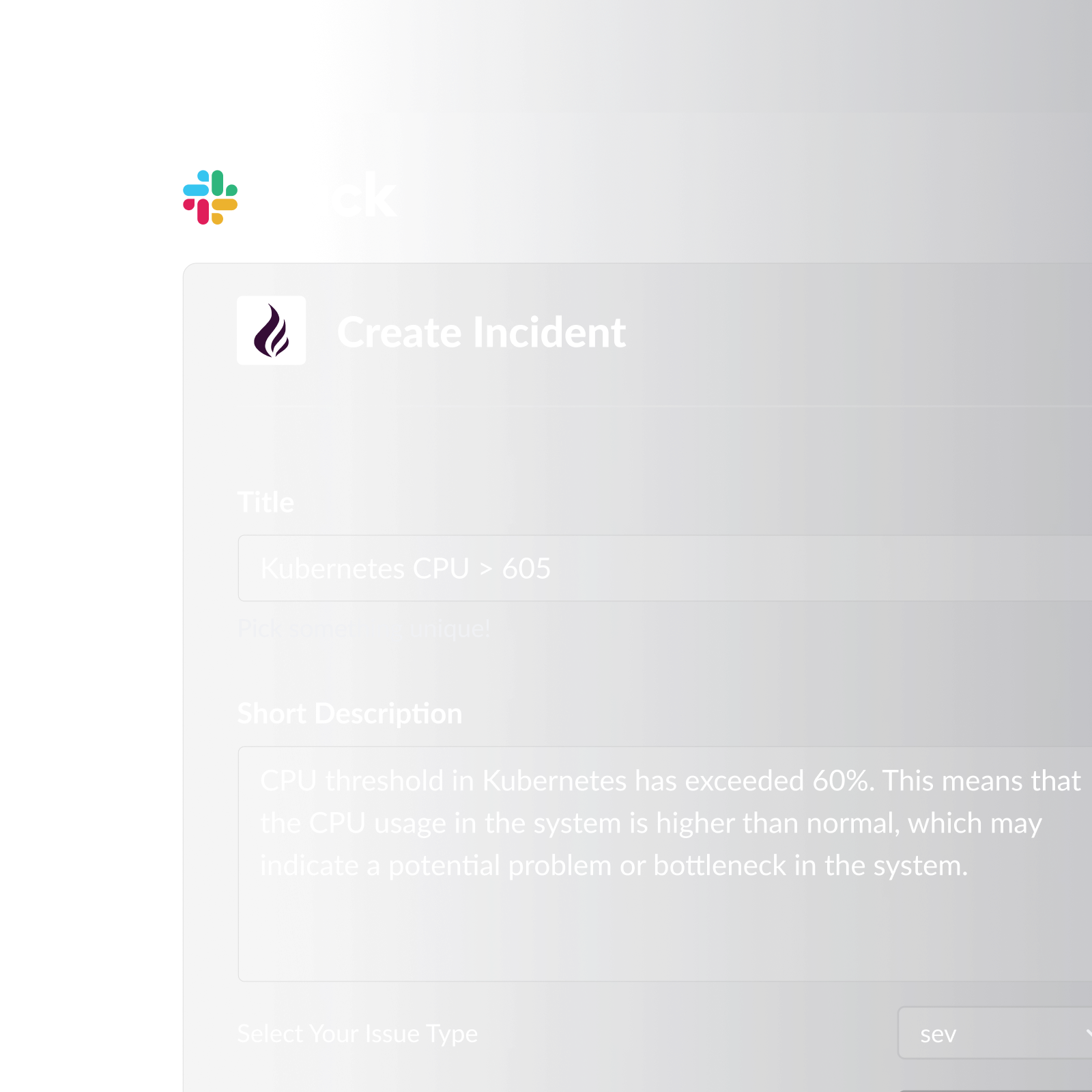
A status page communicates incidents to customers. It does not route alerts to the right on-call engineer, manage escalation when the primary responder is unavailable, or handle the incident response workflow inside Slack. Every team that uses a status page also needs an on-call management and incident response layer.
Pagerly fills that layer for engineering teams that operate in Slack. When a monitoring alert fires, Pagerly routes it to the current on-call engineer based on your rotation schedule. Escalation engages automatically if the primary does not acknowledge. Engineers create Jira tickets or PagerDuty incidents from Slack with a single emoji reaction.
What Pagerly adds alongside your status page tool:
- On-call rotation management entirely within Slack, with AI-powered custom rotation creation
- Slack usergroup sync so @sre-on-call always reflects the current on-call engineer
- Channel topic auto-updates showing who is on-call in designated Slack channels
- Automatic escalation if the primary responder does not acknowledge within your defined window
- Emoji-triggered Jira ticket or PagerDuty incident creation from Slack alert messages
- Two-way sync with PagerDuty, OpsGenie, Jira, Datadog, and Jira Service Management Operations
- Cover request system for self-service shift swaps in Slack
- Automated shift reminders at 6 hours, 12 hours, and 1 day before each shift
- Google Calendar integration so engineers see on-call shifts alongside their work schedule
- Per-team pricing so costs stay flat as the team grows
Ready to complete your incident response stack? Choose the status page alternative that fits your team and pair it with Pagerly for on-call routing, escalation, and Slack-based incident workflow. Get started free